Willmar ConcreteWillmar Concrete(320) 419-1056

Concrete Contractor in Litchfield, MN - Driveways and Slabs Set on a Packed Base

Willmar Concrete is a concrete contractor based in Willmar that pours driveways, patios, sidewalks, steps, garage floors and foundations for homeowners and property owners in Litchfield, from tearing out the old slab to finishing the new one.

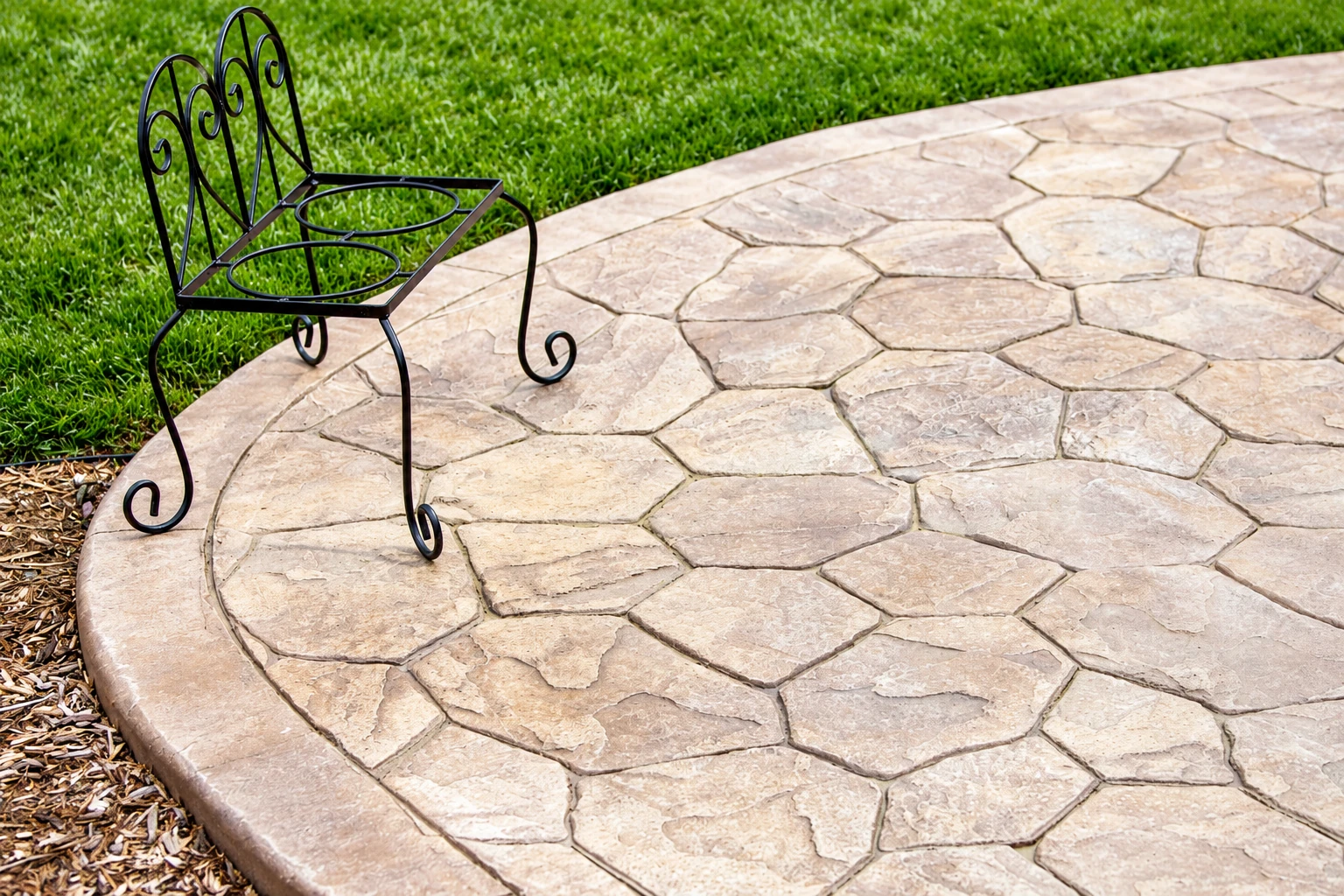
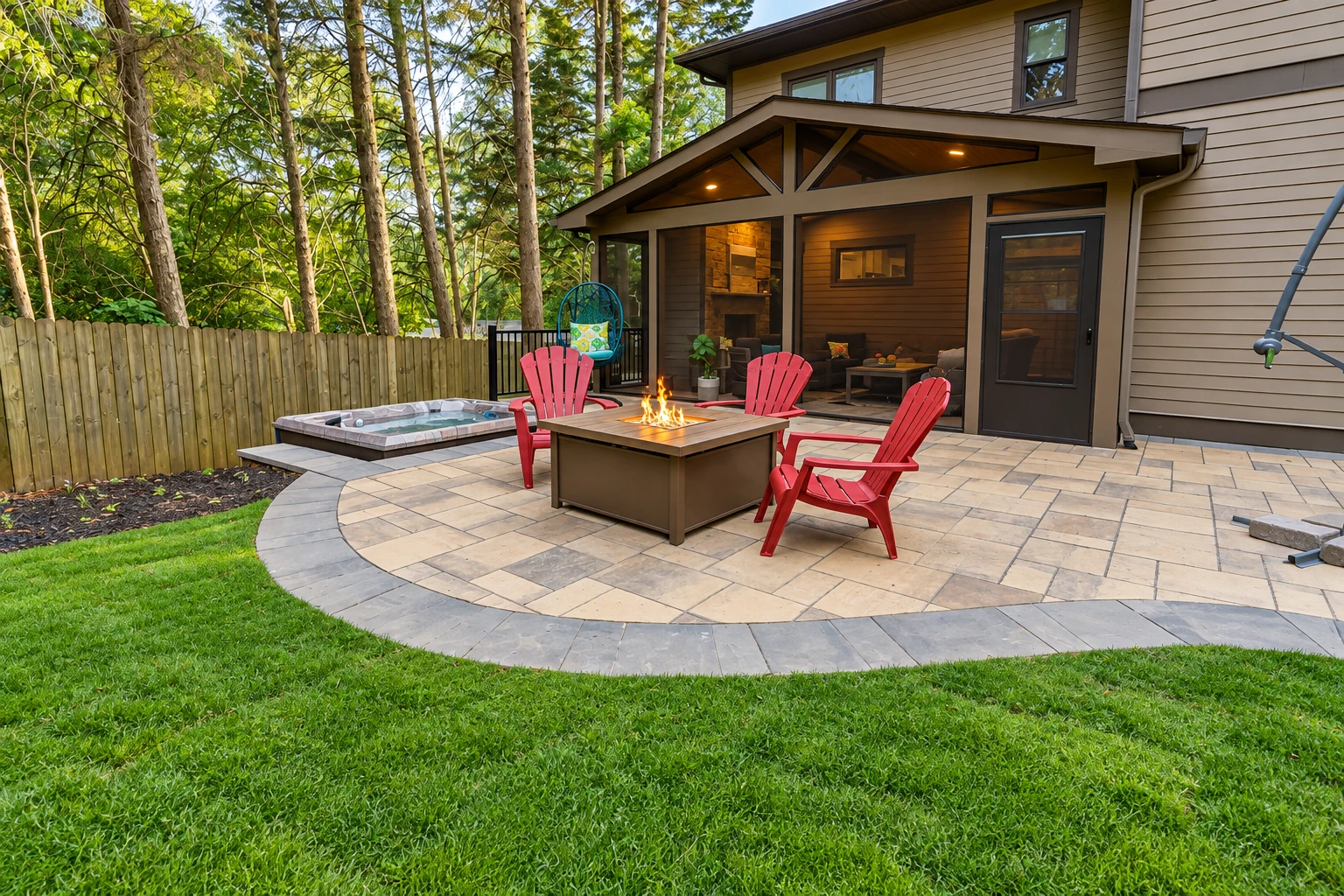
A curved stamped-concrete patio with an irregular tan stone pattern borders a lawn, with a black wrought-iron chair at the edge.

Litchfield homes and the concrete around them

Litchfield is one of the cities most of our calls come from, a short drive from our base in Willmar. The older blocks near downtown have houses with original walks, steps and detached garages, and the newer streets toward the edges of the city have attached garages and wider driveways. Most of what we're asked about here is driveways, front walks, steps and patios that have settled or cracked over the years.

That mix shapes how we start. On an older lot, we usually tear out the old concrete first and see what it was sitting on before we plan the new base, and around a newer house, where the ground was dug and backfilled during building, we check how well it's packed before we pour.

Concrete work we do for Litchfield properties

Most of what we pour in Litchfield is flatwork, the driveways, patios, walks and floors that lie flat on the ground, but we also build steps, walls, footings and foundations. Every job is planned the same way. I come out, look at what's there now and where the water runs, and write the estimate. Then our crew digs out, packs the base, forms, pours and finishes, and I check the work on site before we're done.

  • Concrete driveway building

    Older driveways often sink where they meet the garage or crack under heavier trucks than they were built for. We tear out the old slab, rebuild the base and pour one built for today's vehicles.

    Explore service
  • Concrete patio construction

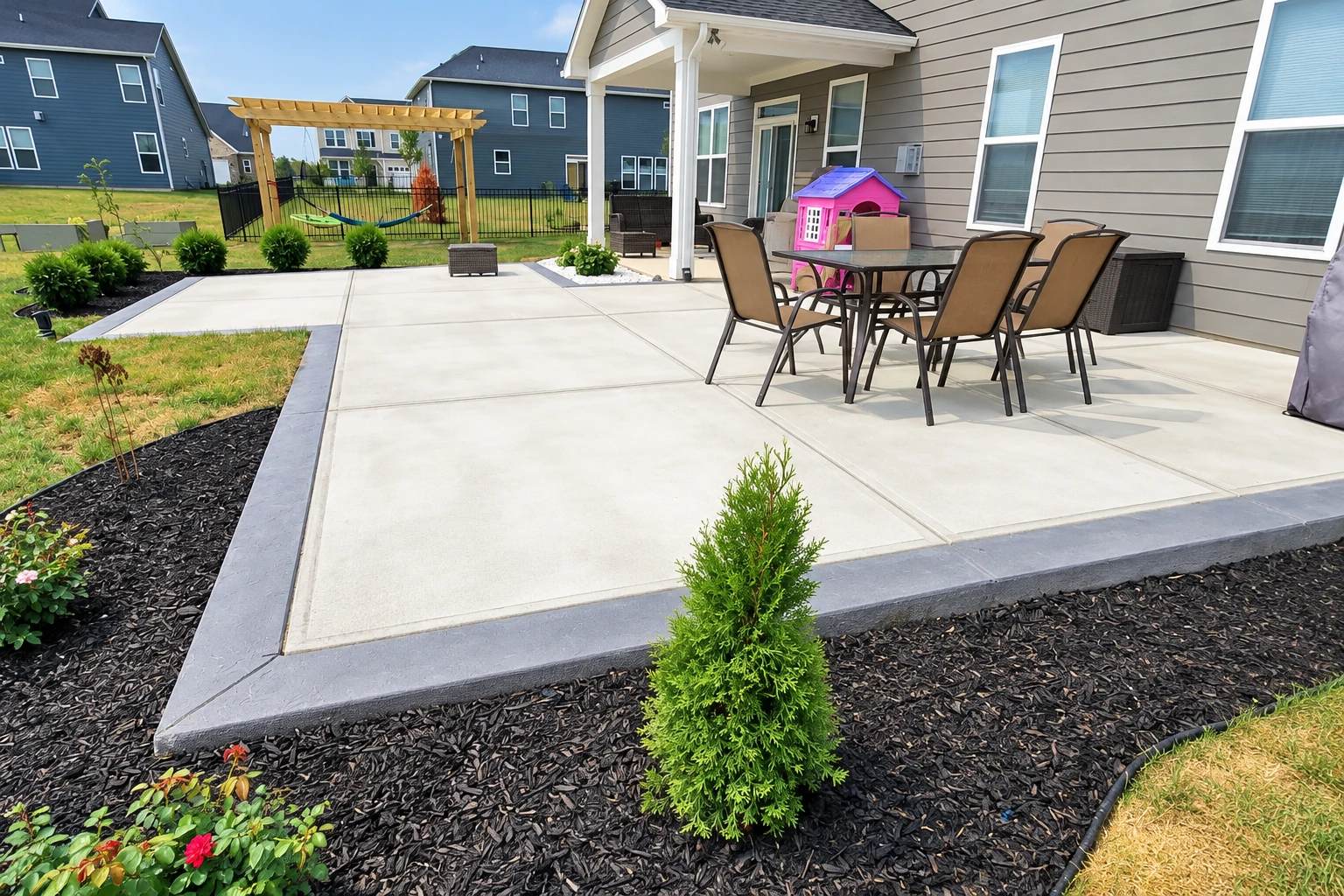
    Back patios on older homes are often small slabs that have gone uneven. We size the new one with you, around how you'll use the space and where the table and grill go.

    Explore service
  • Stamped concrete services

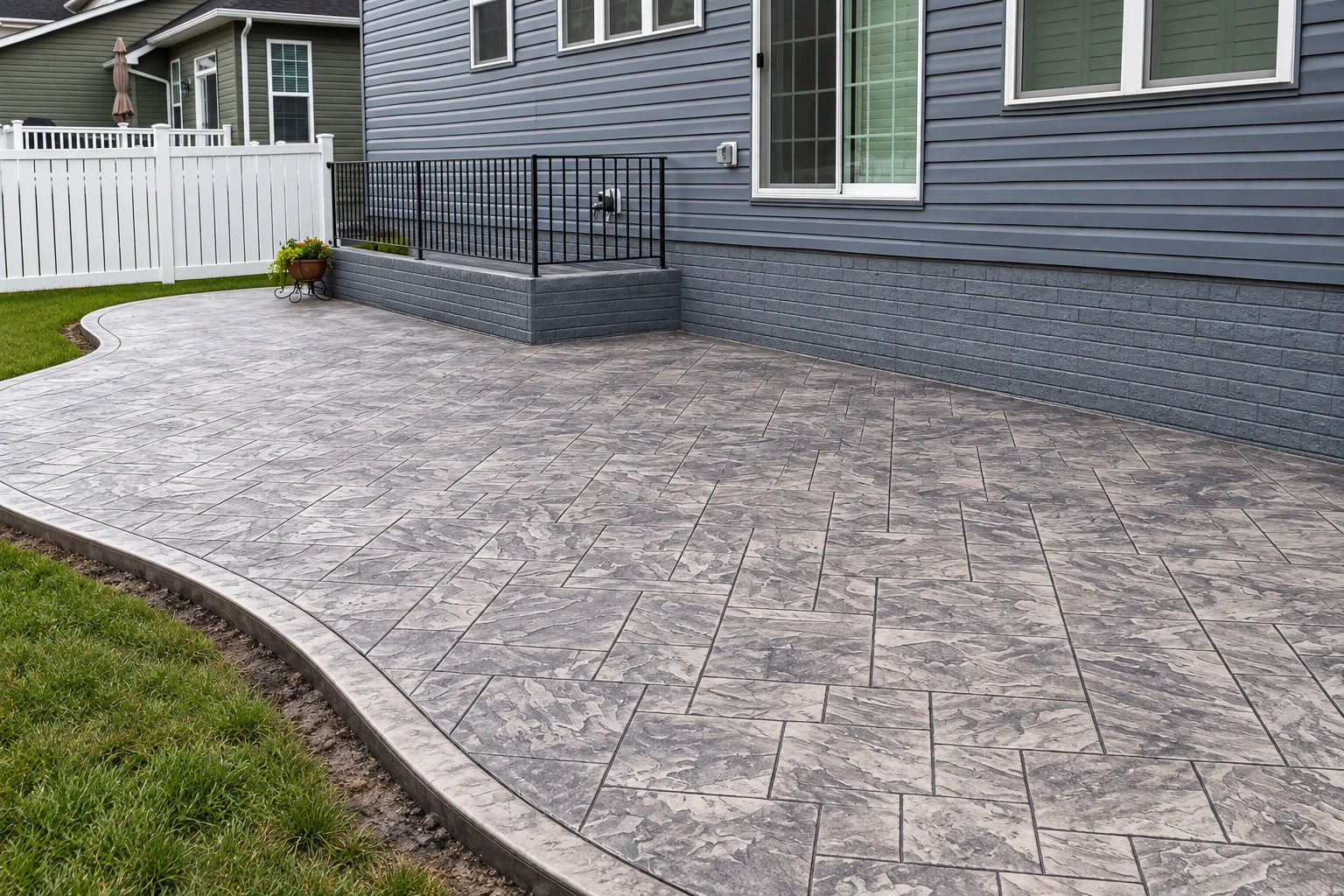
    Homeowners who want the look of stone or brick without loose pavers ask us for stamped concrete. We press the pattern while the concrete is still soft, then color and seal it.

    Explore service
  • Concrete sidewalk building

    Front walks on older houses often tip and crack where roots or settling got under them. We take out the bad sections, rebuild the base and pour a walk that meets your steps evenly.

    Explore service
  • Garage floor concrete

    Older garage floors are often cracked, pitted or sloped the wrong way. We break out the old floor, pack the base and pour a new slab that drains toward the door.

    Explore service
  • Decorative concrete

    When plain gray doesn't suit the house, decorative concrete adds color, scored patterns or a finished edge. We talk through how each finish holds up and what upkeep it needs before you pick one.

    Explore service
  • Concrete retaining walls

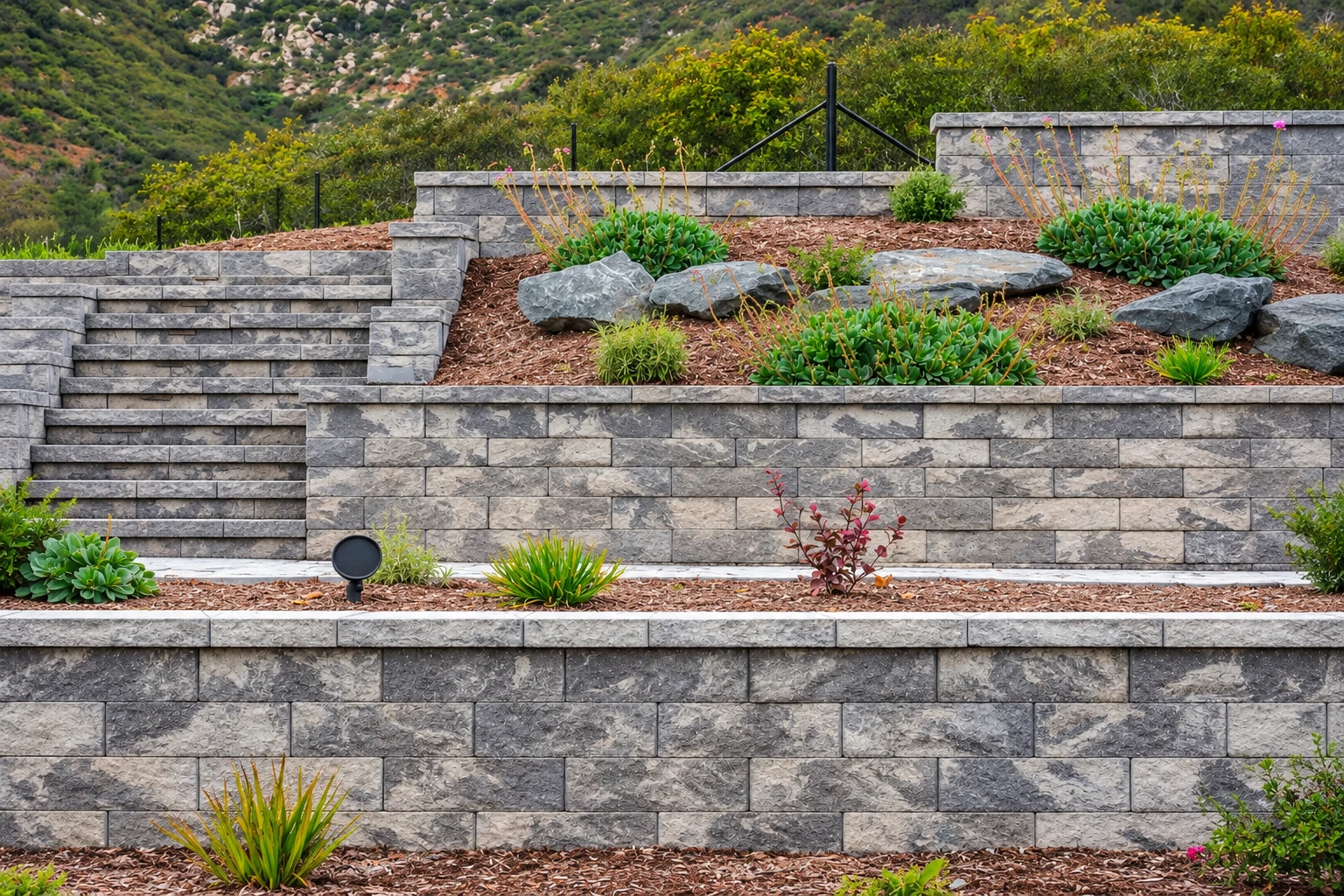
    Sloped yards and driveways cut into a grade sometimes need a wall to hold the soil back. We build them on a footing with drainage behind, so water has somewhere to go besides the wall.

    Explore service
  • Concrete floor installation

    Basements, shops and outbuildings on older properties often have a dirt or broken floor that's hard to use. We prepare the base, set the forms and pour a flat, finished floor inside.

    Explore service
  • Concrete pool decks

    Pool decks need to grip when wet and stay comfortable under bare feet. We slope the deck away from the pool and house and choose a textured finish that's safer to walk on.

    Explore service
  • Concrete steps construction

    Steps on older homes often pull away from the house or crumble at the edges. We form new steps and give them a broom finish, a lightly brushed texture that helps your footing.

    Explore service
  • Slab foundation building

    Garages, additions and outbuildings often start with a slab foundation, one pour the building sits on. We dig out, pack the base and pour it level and square for the framers.

    Explore service
  • Foundation installation

    New homes and additions need walls and footings set below the building before anything goes up. We form and pour the foundation to the plans and handle inspections when a permit applies.

    Explore service
  • Concrete parking lot building

    Shops, churches and rental properties need lots that carry cars and trucks without breaking up. We build them on a deep, packed base and slope them so water drains off instead of pooling.

    Explore service
  • Concrete footings

    New decks, porches and garages need footings, the concrete pads or trenches that carry the weight down into firm ground. We dig and pour them to the depth and size the plans call for.

    Explore service
  • Foundation raising

    When part of an older house settles and doors stick or floors slope, the foundation may need raising. We look at what moved and why before we recommend how to lift and support it.

    Explore service
  • Concrete cutting

    Adding a door, a drain line or a wider driveway often means cutting into concrete that's already there. We saw clean, straight cuts so the rest of the slab stays whole.

    Explore service

What to know before concrete work starts in Litchfield

Before we pour anything here, there are a few things to settle with the city and between us. These two notes cover the permit side, what to ask any contractor, and what sets your price and schedule.

Permits and licenses before we schedule

Concrete work in Litchfield can need a permit from the city's building official, and under the state's rule, the owner or someone acting for them has to get any required permit before work starts. So before your job goes on our calendar, I check with that office about what it requires, and the start date waits on any permit it needs. You don't have to sort that out yourself.

When you compare bids, ask each contractor which state license or registration they hold, because the state decides which one a home contractor needs, and I've set out the details in the questions below. A contractor worth hiring will answer that plainly the first time you ask. If a bidder can't tell you, weigh that before you sign anything.

  • Ask whether a quote includes handling the permit, not just the pour.
  • When a permit applies, we handle paperwork and inspections and keep you posted.
  • Door-to-door sellers here must submit a permit application to City Hall before selling.

What sets your price and your schedule

Your price comes down to the size and thickness of the slab, whether an old one has to come out first, how much base work the ground needs, and the finish you pick. A plain broom finish costs less than stamped or colored work. The estimate is where you'll see what each of those means for your property, written out so it's easy to follow.

The schedule turns on the permit if one applies, on our calendar, then on curing, the days the concrete needs to harden before it can take weight. You'll be walking on it well before you can drive on it. If the budget gets tight, the base under the slab is the last thing I'd cut, because nobody sees it on day one, but it decides whether the slab settles later.

  • Tight backyards a truck can't reach take more labor to pour.
  • Rebar, the steel grid inside a slab, adds cost but holds cracks together.
  • Plan on parking elsewhere until curing lets the driveway carry a car.

A clear estimate for your Litchfield concrete job, written on site

Call (320) 419-1056 or send the form, and we'll reply within one business day to set up a visit. I'll come out to your property in Litchfield, look at the job with you and write a free estimate that shows exactly what you'd be paying for. There's no obligation and no pressure to book, and I thank you for your time either way.

(320) 419-1056

What we find on Litchfield driveways, walks and slabs

Most of the concrete we're called about here is older work that has settled, cracked or started holding water. These are the conditions we look for when we come out, and what each one means for your new slab.

  • Driveways that sank at the edges

    When a driveway drops along its edges or where it meets the garage, the usual cause is the subgrade, the ground the slab sits on. It was often raked level and never dug out and packed, so it settled with the dirt. We dig down to firm ground and pack new base before we pour.

  • Slabs that tip toward the house

    Patios and walks that have settled often end up sloping back toward the foundation, so rain runs to the house and pools along the wall. Before we form anything, we check where water runs across your lot and set the new slab to fall away from the house.

  • Steps and walks poured years apart

    On older homes, the front steps and walk were often poured at different times, so they've pulled away from each other, tipped or worn at the edges. When both are tired, we usually replace them together so the walk meets the bottom step evenly and every step is the same height.

  • Cracks running in odd places

    Cracks that wander across a slab usually mean the control joints, the grooves cut so the slab cracks along a line someone chose, were cut late or skipped. We cut ours on time and lay them out for the size and shape of your slab, so any cracking is far more likely to follow them.

  • Tops that chip or turn dusty

    A surface that flakes, chips or leaves dust on your shoes often goes back to pour day, when the top dried too fast in the midday heat. We schedule pours to stay out of the worst of that heat and finish the surface at the right time, not in a rush.

How we run a concrete job from estimate to cleanup

I started out quoting concrete jobs before I ever finished one, and that still shapes how we work. Here's what you can expect from the first visit through the final check on your slab.

An estimate you can read line by line

Years on the sales side taught me that a clear quote matters as much as the concrete. So I come out myself, measure, look at the old slab and where your water goes, and write an estimate that lists the tear-out, the base, the slab and the finish as separate lines. You know exactly what you're paying for before you sign.

That also means you can set our estimate beside anyone else's and see where the numbers differ. If two bids are far apart, check whether both include tearing out and hauling away the old slab, the base work, steel and cleanup, because those are the lines that most often go missing. I'm happy to walk you through ours line by line.

  • Licensed and insured for every job

    We're licensed and insured, and I'll answer any question about either when I come out. That matters on concrete work, because our crew brings forms, tools and loaded trucks onto your property, and you should know who stands behind them.

  • The owner checks the work

    Our crew does the forming, pouring and finishing, and I check the work on site. I'm the same person who came out and wrote your estimate, so I know what we agreed to and can see whether the finished slab matches it.

  • Satisfaction guaranteed on our work

    Satisfaction guaranteed is the promise we make, and it's part of why I check the work myself before we call a job finished. The concrete has to be something I'm glad to put our name on, and I'd rather catch a problem on site than hear about it later.

  • Based nearby in Willmar since 2023

    We opened in Willmar in 2023, and Litchfield is one of the cities most of our calls come from. Being close means coming out to look at your job, and checking the crew's work on site, is a short trip for us. When you're ready, call (320) 419-1056 or use the form above.

Questions about concrete permits, licenses and cost in Litchfield

These are questions that come up before a concrete job in Litchfield, from permits to state licenses to price. Each answer starts with the short version, and you're welcome to call me with anything it doesn't cover.

How do I get a building permit for concrete work in Litchfield, MN?

Building permits in Litchfield go through Rum River Consultants, the city's building official, which handles applications and inspections through the Baseline online portal. Its permits can include building, roofing, demolition and other work, and that list doesn't settle whether a driveway or patio needs one, so we ask that office about your job before we schedule. When a permit applies, we take care of the paperwork and inspections.

Which small projects need no building permit in Litchfield, MN?

Under the state building rule, finish work such as painting, tiling, carpeting, cabinets and countertops needs no building permit, and neither do one-story detached sheds and playhouses up to 200 square feet or fences no more than seven feet high. Decks are on the list too when they stand no more than 30 inches above the ground next to them, aren't attached to a structure with frost footings and aren't on an accessible route. The list doesn't cover driveways, patios or other slabs, so we check with the city's building official before we pour.

How do I know which state license a concrete contractor needs in Minnesota?

The Minnesota Department of Labor and Industry sets the licenses for contractors working on homes of one to four units, and anyone working directly for you in more than one skilled trade needs a residential building contractor or residential remodeler license. A contractor who offers just one specialty skill on homes and holds no residential license falls under the state's contractor registration program instead. Residential building contractors whose home work brings in less than $15,000 a year can hold a certificate of exemption, so ask each bidder which of these they have.

How much does a new concrete driveway cost in Litchfield?

A fair driveway price takes seeing the driveway, because the biggest swings come from what's under and around the slab, not just its size. Hauling away an old driveway, digging out soft ground and packing new base, adding steel for heavier vehicles, and correcting a slope that sends water toward the garage all add cost, while a plain broom finish keeps it lower. When you'd like a number for your own driveway, call (320) 419-1056 and I'll come out and write it up.

Service areas

We're based in Willmar and work in Litchfield and other cities in the area, not only the two with their own page. If your address isn't listed, call (320) 419-1056 and ask.

Ask about your location
(320) 419-1056Get an estimate